
How the Randolph County Court Calendar Works
Randolph County shares Missouri’s 14th Judicial Circuit with Howard County. The Circuit Clerk keeps circuit, associate, municipal-division, civil, criminal, traffic, domestic, probate, juvenile/adoption, and related court records. No standalone public daily calendar for the county exists online, so the dependable chain runs from the current notice, to the newest setting in the Case.net docket or the Scheduled Hearings & Trials Search, to confirmation by the assigned court office or clerk. A general calendar result can point to a setting. It cannot replace a clerk-confirmed date after a reset.
Read any schedule entry beside the case number, court or division, setting type, and the most recent docket entry. City ordinance routes can also differ from ordinary state-court matters.
Randolph Court Schedule Search
Missouri Case.net is the statewide public search layer. Its official instructions list the Scheduled Hearings & Trials Search plus Litigant Name Search, Filing Date Search, and Case Number Search. For a date question, use the hearing search first. Then open the case record. Compare the setting against the case header and docket entries. A complete case number is usually the surest way to know the right case is open.
The system may show date, time, court or division, judge, case number or style, and setting type when entered. Field labels and filter menus appear in the live portal, so check it directly. A similarly named non-court site is never a safe source for a hearing date.
Note: A hearing-list result identifies a scheduled event. The newest docket entry and court notice determine whether that event remains current.
Randolph County Court Date Lookups
Start with the citation, summons, notice, or court order. On a traffic matter, the return date on the citation is the starting point. If the case is continued, a later court notice controls. Next, use Case.net’s Scheduled Hearings & Trials Search or the case number to inspect the most recent setting. The Circuit Clerk can confirm a case-record setting. The assigned division or court office handles a live trial or motion calendar question.
- Keep the paper notice and full case or citation number available.
- Search Case.net by case number or use Scheduled Hearings & Trials Search with Randolph or the 14th Circuit if offered.
- Open the matching case and compare the newest docket entry with the scheduled event.
- Call the Circuit Clerk at 844-277-6555 ext. 400 for a records or setting confirmation.
- Use the courthouse public-access terminal or records counter when an eligible electronic file needs inspection.
- For a city ordinance case, confirm the municipality and current court assignment before relying on the date.
Randolph Calendar Versus Notice
An old notice can still matter as history after a continuance or reset. The docket may keep the original setting and add “continued,” “reset,” “pass,” “rescheduled,” or a new notice or order. Treat the latest dated setting as current only when the entries say so plainly. A calendar search can also lag a same-day change. The court notice and clerk confirmation settle it when dates conflict.
Settings move for many reasons: a motion, a request by the judge or counsel, court congestion, a closure, or a signed order. Missouri’s eFiling FAQ explains that an attorney may request a date in a pleading or Note to Clerk. The clerk otherwise assigns the hearing date. That describes a statewide scheduling role, not a promise about any particular Randolph division’s practice. Ask the clerk whether the listed setting is still current and which office controls it.
Court Settings: What Each Field Means
A court setting is several pieces of information, not just a date. Date and time tell you when the case is scheduled. The court, division, or courtroom tells you where the event belongs. The setting type describes the event’s purpose. Compare the case number and style too. That way you never follow a setting for another case with a similar party name.
| Date | The scheduled calendar date. Later entries can replace it. |
|---|---|
| Time | The listed appearance or docket-call time, not necessarily a promise of an individual hearing length. |
| Court or division | The Randolph court location or assigned division responsible for the setting. |
| Judge | The judge or court assignment shown in the official entry, when listed. |
| Setting type | Arraignment, pretrial, motion hearing, status conference, trial, sentencing, review, or another stated event. |
Randolph Court Setting Terms
Setting labels are functional shorthand. An arraignment is a first formal criminal appearance. The charge, plea, counsel, conditions, or next date may be addressed there. A docket call or announcement docket is an administrative event for readiness, pleas, motions, or trial status. A motion hearing is a hearing on a request for court action. The later order is its own docket entry. A dismissal docket is not proof of dismissal until the entry or order appears.
- Pretrial conference
- A criminal or civil case-management setting before trial.
- Status conference
- A progress, settlement, or discovery review.
- Bench trial
- A trial in which the judge decides facts and law.
- Continuance, reset, or pass
- A postponed or changed setting that requires a newest-date check.
- Review hearing
- A later compliance or status event, often after an earlier order or disposition.
Randolph City Court Schedules
The city name on a ticket is not enough. It does not always tell you which court holds the schedule. The current 14th Circuit local rules govern these cases. Clark, Higbee, and Renick municipal ordinance cases are assigned to associate divisions. Clifton Hill still reports through a municipal division. Its city contact and the Circuit Clerk form a separate verification chain. Moberly's municipal court closed in December 2018. Those cases now sit with the 14th Circuit Court in Huntsville.
Read the citation first for the court that issued it and the return date. Then search the full number in Case.net. Ask the right court or clerk to confirm the newest setting. A city hall may not have the full electronic case file or the daily court list. If an ordinance date is unclear, gather details first. Identify the municipality, the case number, and the approximate year before you call.
Randolph Court Schedule Sources
Names can mislead on a court schedule. The official Randolph County community page lists the county's cities and villages, which helps you separate a city label from the court path behind it.
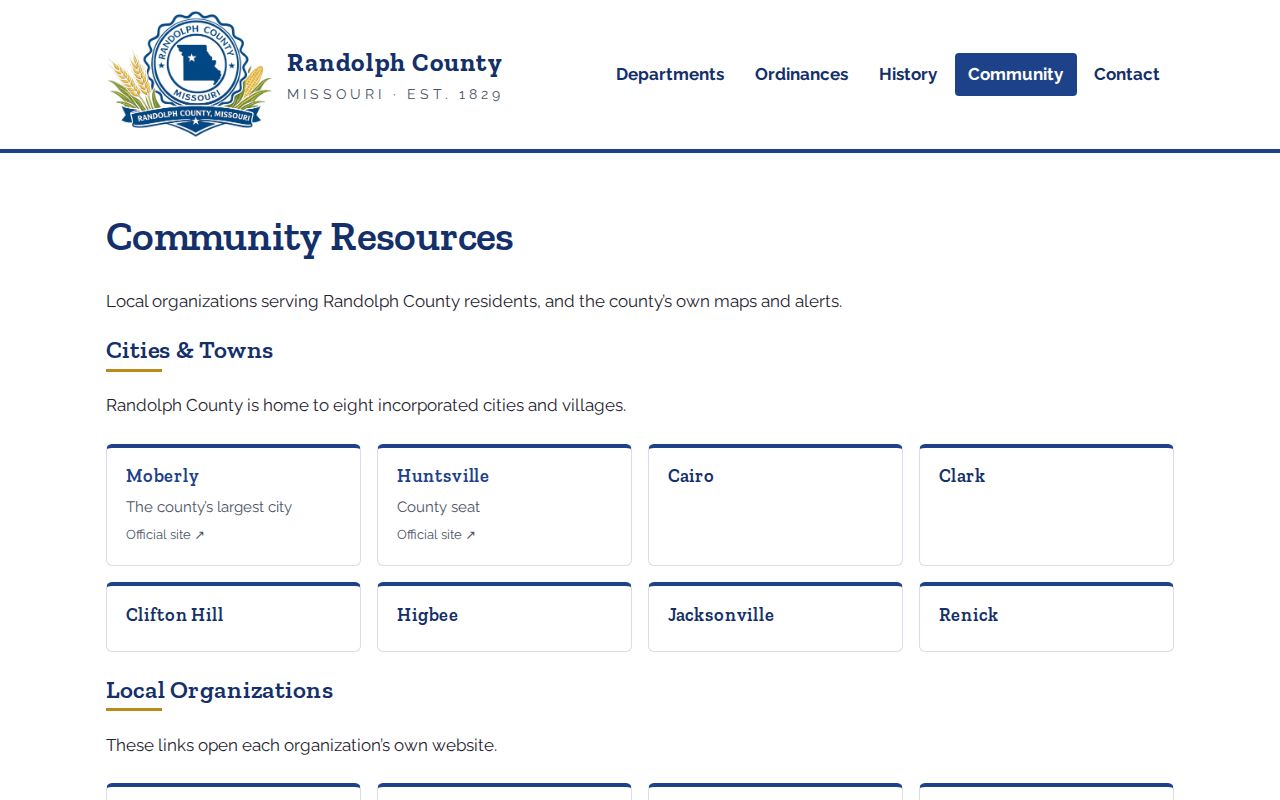
That civic list carries no daily court schedule. A case number, a Case.net result, and clerk confirmation remain the date-checking chain. The official Presiding Circuit Judge page shows the county court office context you need when a setting calls for division-level confirmation.
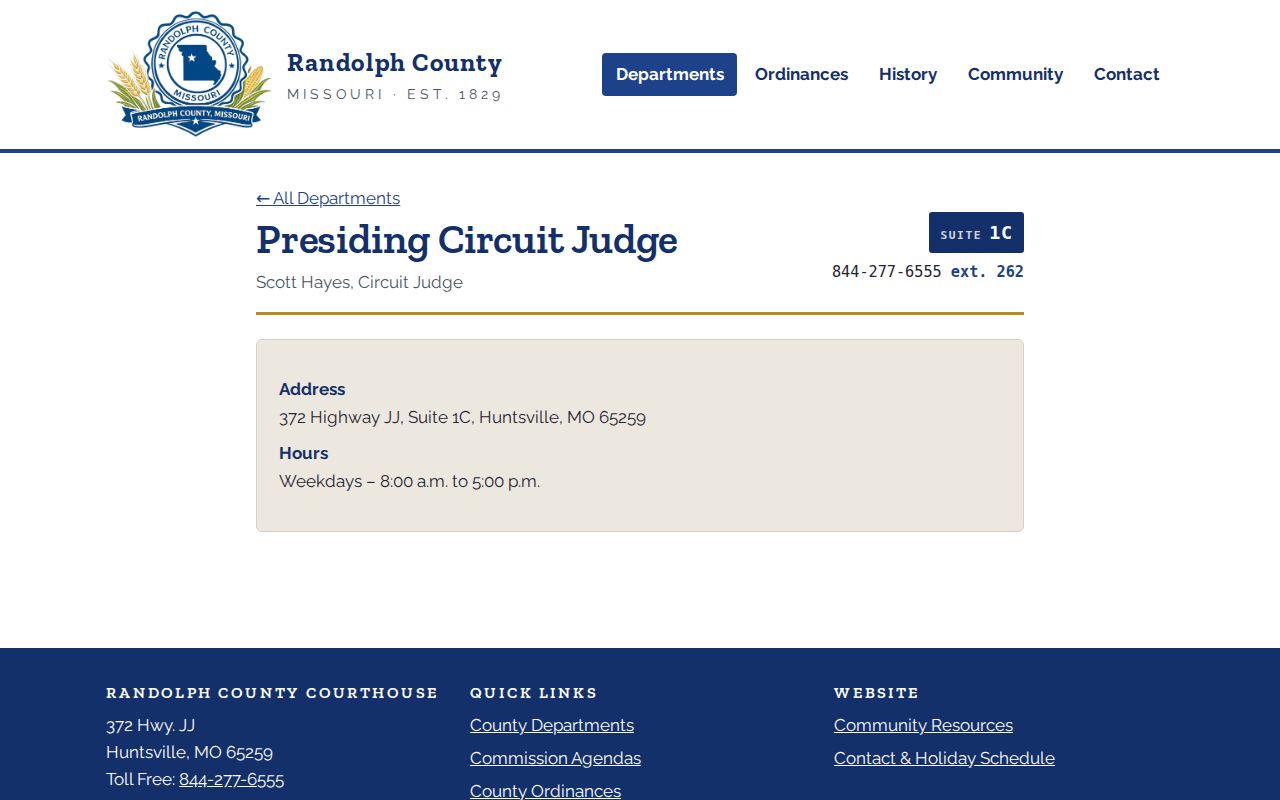
That judge's page helps route court-office questions. It is not a stand-alone calendar, though, and no one should treat it as permission to appear without checking the case docket. The county clerk's city hall and public-building directory is another local source for municipal contacts.
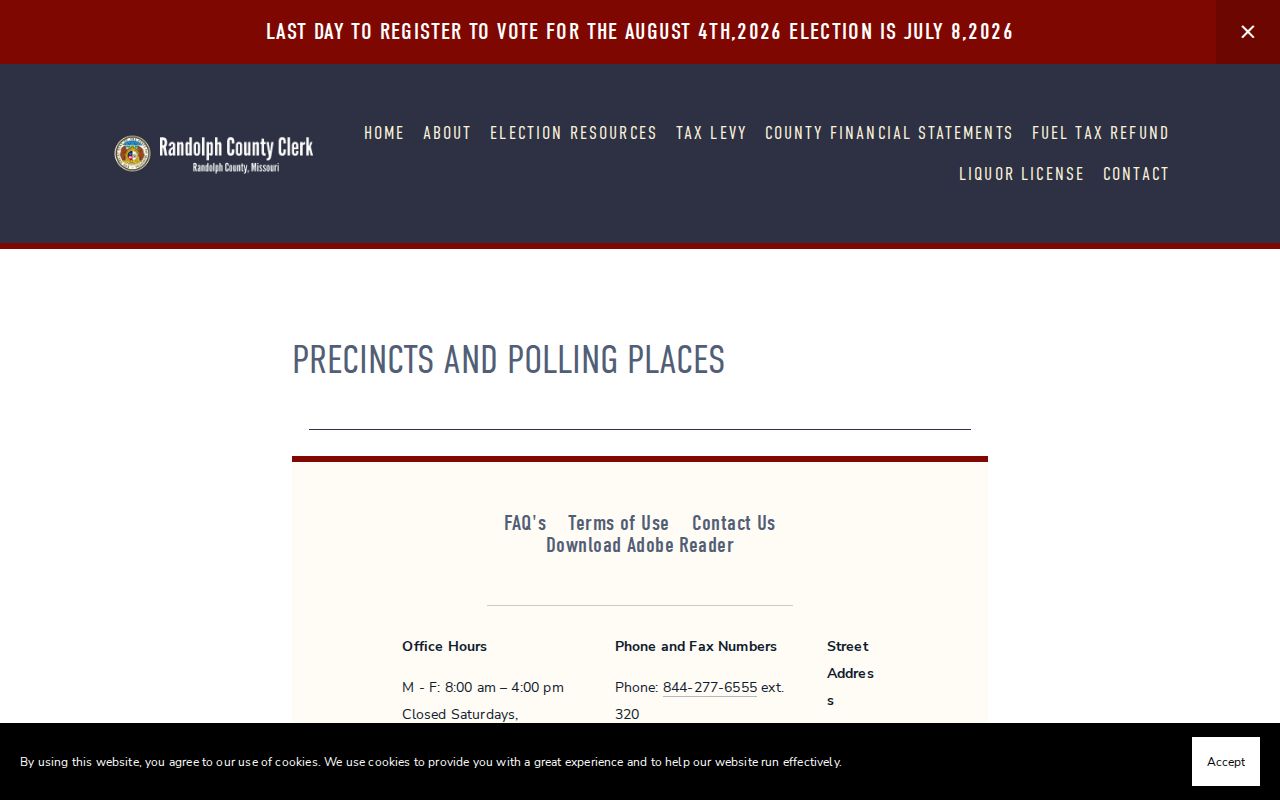
A building directory can help you reach the right office. Judicial scheduling still has to be confirmed with the court or the Circuit Clerk.
When a Court Date Moves
A reset or continuance moves a scheduled event. It decides nothing on the merits. The docket may list the first setting along with later entries. Sort them by date in your head. Look at the most recent notice, the scheduled event, and the order. If they disagree, call the Circuit Clerk. Ask for the assigned division or coordinator instead of assuming the oldest document controls.
After a recent change, keep the notice. Write down the date, time, court, and staff contact you used to verify it. That record helps you tell a changed hearing apart from a different case with a similar party name. A listed hearing does not prove every party received the new notice. The public calendar never substitutes for a court order. The assigned court office can tell you whether a signed reset or continuance has been entered.
Randolph County publishes no standing Zoom link or remote-hearing calendar. So never assume an appearance can be made remotely. Ask the assigned court office whether the setting is in person, remote, or hybrid, and how access instructions are distributed. County contact materials also list closures. That is worth a check when weather or a holiday may affect a date.
Missed Settings and What Comes Next
Act promptly after a missed setting. Find the full case number. Check the newest Case.net entry, and call the Circuit Clerk or the assigned court office. They can tell you the current status and the next required step. An earlier date passing does not mean the case was dismissed or reset. Civil and criminal cases carry different consequences. Only the court decides the response to a nonappearance.
Missed a setting? A missed criminal court date can lead to entries such as failure to appear, a warrant or capias, bond consequences, or a new court action.
Contact the court or clerk immediately and consult a licensed attorney where appropriate, especially before appearing on a case with an unclear status.
For a city ordinance matter, tell the clerk whether the citation names Clark, Higbee, Clifton Hill, Moberly, or another municipality. The path can depend on the division. It may be an associate division, a municipal division, or the 14th Circuit route. The citation and the newest docket entry give you the best starting details for that confirmation.
A document or ECASE file may not load remotely. You can also use the public terminal or the clerk counter then. Keep any new notice. Confirm the court, division, date, time, and setting type before you act.